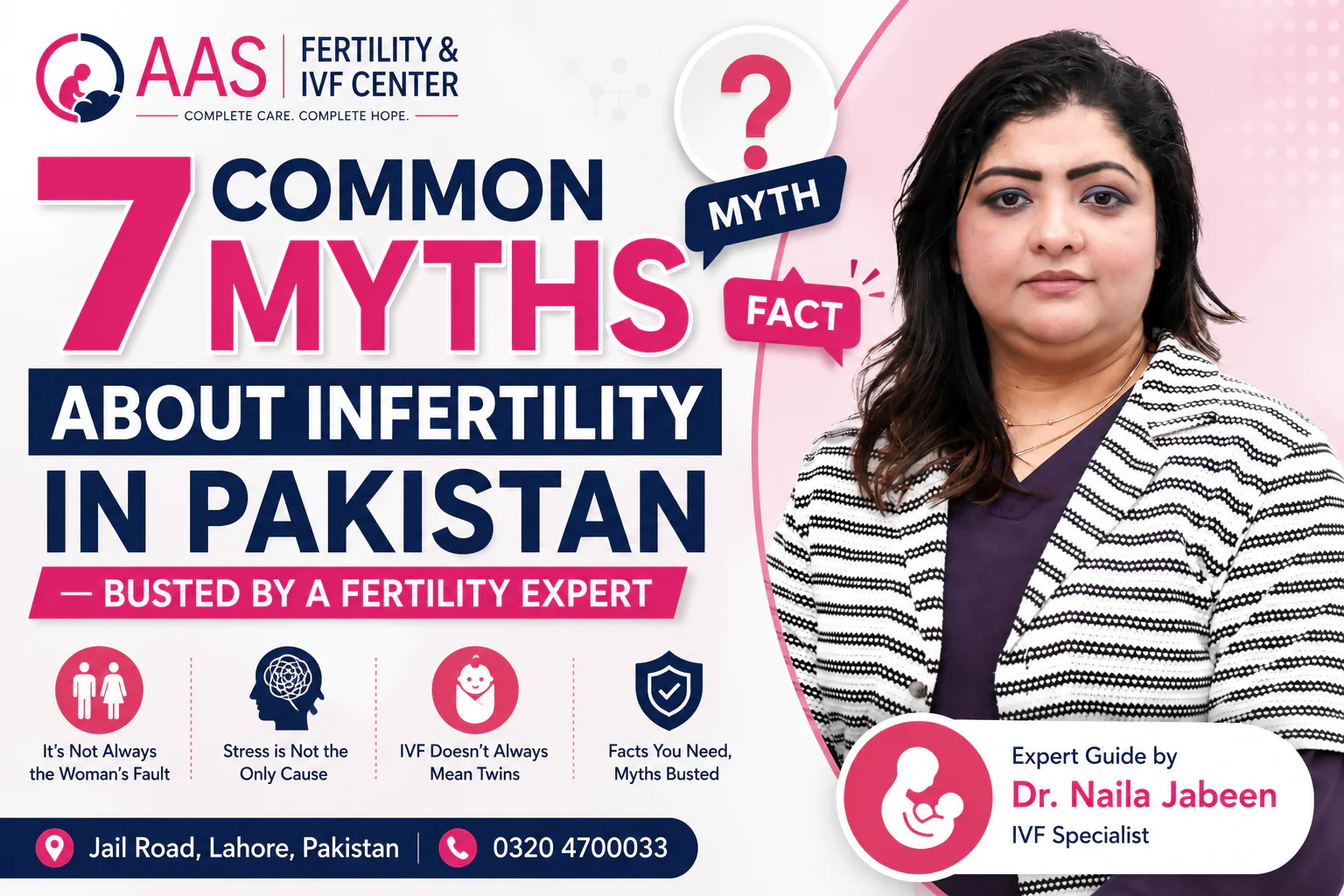
7 Common Myths About Infertility in Pakistan — Busted by a Fertility Expert

Infertility myths are still very common in Pakistani society. Unfortunately, these misconceptions often create unnecessary stress, blame, and emotional pressure for couples who are already struggling to conceive. In many cases, myths delay proper diagnosis and treatment, making the journey even more difficult. To improve infertility awareness Pakistan, Dr. Naila Jabeen, IVF Specialist at AAS Fertility & IVF Center on Jail Road, Lahore, is addressing some of the most common infertility myths Pakistan with facts backed by medical science. Understanding the real causes of infertility can help couples make informed decisions and seek the right care at the right time.


Myth 1: Infertility is Always the Woman’s Fault

Myth:

If a couple cannot conceive, the problem must be with the woman.

Fact:

This is one of the most damaging and widespread myths about infertility in Pakistan. Many women face blame from family members and society without any medical evidence. However, fertility experts know that infertility is not just a female issue.

Studies consistently show that male infertility Pakistan contributes to approximately 40% to 50% of infertility cases. Problems such as low sperm count, poor sperm movement, or reduced sperm quality can make conception difficult. At the same time, women may experience conditions such as ovulation problems, hormonal imbalance, PCOS, or blocked fallopian tubes.

Because fertility involves both partners, doctors recommend fertility testing for couples rather than focusing on only one person. A proper diagnosis helps identify the real cause and allows the fertility specialist to recommend the most effective treatment plan.

Infertility is a medical condition—not a reflection of gender, personal worth, or responsibility.


Myth 2: If You Just Relax, You’ll Get Pregnant

Myth:

Stress is the only reason pregnancy is not happening.

Fact:

Many couples hear advice such as, “Stop thinking about it” or “Just relax and it will happen.” While reducing stress can certainly support overall health, stress alone is rarely the sole cause of infertility.

In reality, there are many medical causes of infertility, including ovulation disorders, PCOS, hormonal imbalance, low sperm count, blocked fallopian tubes, endometriosis, and age-related fertility decline. These conditions require proper evaluation and treatment rather than simply waiting for stress levels to improve.

That said, emotional stress can affect overall well-being and may make the fertility journey more challenging. Therefore, managing stress through healthy lifestyle habits, exercise, family support, and counseling can be beneficial.

However, couples should not assume that relaxation alone will solve fertility problems. If pregnancy has not occurred after a reasonable period of trying, consulting a fertility expert Lahore is the best next step.


Myth 3: IVF / Test Tube Baby Always Results in Twins or Triplets

Myth:

Every IVF or test tube baby treatment leads to twins or multiple babies.

Fact:

This misconception comes from earlier fertility treatments when multiple embryos were often transferred to increase pregnancy chances. Today, fertility medicine has advanced significantly.

Modern IVF treatment focuses on both safety and success. In many cases, fertility specialists recommend transferring a single healthy embryo, especially when embryo quality is excellent. This approach is known as Single Embryo Transfer (SET).

The chance of twins or triplets depends largely on the number of embryos transferred rather than the IVF procedure itself. Therefore, many IVF pregnancies result in the birth of a single healthy baby.

Understanding the facts helps reduce unnecessary fear about IVF myths Pakistan and test tube baby myths. Couples should discuss embryo transfer options with their fertility specialist to understand the safest approach for their specific situation.

At AAS Fertility & IVF Center, treatment decisions are personalized to maximize safety while improving success rates.


Myth 4: Infertility Only Affects Older Couples

Myth:

Young couples cannot experience infertility.

Fact:

Although age and fertility are closely connected, infertility can affect couples of any age—including those in their twenties and early thirties.

Many younger women experience PCOS and infertility, ovulation disorders, hormonal imbalances, or blocked fallopian tubes. Similarly, younger men may face issues related to sperm count and quality that affect fertility.

Age does remain an important factor because fertility naturally declines over time, especially for women after age 35. However, age is only one piece of the puzzle. Lifestyle factors, medical conditions, genetics, infections, and reproductive health history can all influence fertility.

Because infertility can affect younger couples as well, it is important not to ignore symptoms simply because of age. Early diagnosis often allows fertility specialists to identify problems sooner and improve treatment outcomes.

No couple should assume they are “too young” to experience fertility challenges.


Myth 5: Once You Have One Child, You Can’t Be Infertile Again

Myth:

Having one child means future pregnancies will happen naturally.

Fact:

Many people are surprised to learn about a condition called secondary infertility. Secondary infertility occurs when a couple successfully conceives one child but later struggles to become pregnant again.

Several factors can contribute to secondary infertility. Age-related fertility decline is one common reason. In addition, hormonal changes, weight fluctuations, new reproductive health conditions, sperm quality changes, or complications from previous pregnancies can all affect future fertility.

For example, a woman who previously conceived naturally may later develop ovulation problems or blocked fallopian tubes. Likewise, a man’s sperm quality may change over time due to health or lifestyle factors.

Because of these possibilities, previous pregnancy does not guarantee future fertility. Couples experiencing difficulty conceiving another child should seek professional evaluation rather than assuming pregnancy will happen eventually.

A fertility specialist can identify underlying issues and recommend appropriate treatment options based on current reproductive health rather than past fertility history.

Myth 6: Home Remedies and “Garam” Foods Can Cure Infertility

Myth:

Eating certain foods, herbal remedies, or “garam” foods can cure infertility completely.

Fact:

Traditional foods and home remedies have been part of Pakistani culture for generations. Many families recommend foods such as dry fruits, honey, herbs, or other dietary changes to improve fertility. While maintaining good nutrition is important for reproductive health, no food alone can cure infertility.

Infertility often results from medical conditions such as ovulation problems, hormonal imbalance, blocked fallopian tubes, endometriosis, PCOS, or male fertility issues. These conditions usually require proper medical evaluation and targeted treatment.

Healthy eating can certainly support overall well-being and may improve fertility in some cases. However, relying only on home remedies may delay diagnosis and reduce valuable treatment time.

The best approach is to combine a healthy lifestyle with professional medical care. A fertility specialist can identify the actual cause of infertility and recommend the most appropriate treatment plan based on individual needs.

Respecting cultural traditions while seeking evidence-based medical advice helps couples make informed decisions about their reproductive health.


Myth 7: IVF / Test Tube Baby is Against Religion

Myth:

IVF or test tube baby treatment is not allowed in Islam.

Fact:

This is one of the most common concerns among couples considering fertility treatment in Pakistan. Many people worry that assisted reproductive treatments may conflict with religious beliefs.

However, Islamic scholars and legal authorities in Pakistan have provided guidance on this issue. The Federal Shariat Court ruling of 2017 clarified that IVF is permissible when the sperm and egg belong to a legally married husband and wife and the resulting embryo is transferred into the wife’s uterus.

Under these conditions, the child is considered the biological and legal child of the married couple. The treatment simply helps fertilization occur when natural conception becomes difficult.

Procedures involving third-party sperm donation, egg donation, or surrogacy are generally not permitted under these guidelines. However, IVF using the married couple’s own reproductive cells remains acceptable.

For many couples, understanding this ruling provides reassurance and allows them to pursue fertility treatment with confidence and peace of mind.


When Should You See a Fertility Specialist?

Many couples wait too long before seeking professional help. Early evaluation can identify fertility problems sooner and improve treatment outcomes.

You should consider consulting a fertility specialist if:

  • You have been trying to conceive for more than one year without success.
  • The woman is over the age of 35 and pregnancy has not occurred after six months of trying.
  • Menstrual periods are irregular, absent, or unpredictable.
  • There is a known history of PCOS and infertility.
  • Previous fertility treatments have not been successful.
  • There is a known male fertility issue such as low sperm count or poor sperm quality.

Early consultation can help identify underlying causes and provide access to effective infertility treatment Lahore options before valuable time is lost.

Book a free consultation — [Link to /contact/]


Why Choose AAS Fertility & IVF Center in Lahore?

When searching for a trusted fertility clinic Lahore, experience, expertise, and compassionate care matter.

At AAS Fertility & IVF Center, patients receive advanced fertility treatment under the supervision of Dr. Naila Jabeen, an experienced IVF specialist dedicated to helping couples achieve their dream of parenthood.

Conveniently located on Jail Road, Lahore, the center provides comprehensive fertility services including:

  • IVF treatment
  • IUI
  • ICSI
  • Micro TESE
  • Laparoscopy
  • Embryo Banking
  • Ovulation Induction
  • PGT-A Testing

The clinic combines modern fertility technology with personalized care, ethical treatment practices, and ongoing patient support. Every treatment plan is designed according to the individual’s medical condition, fertility goals, and overall health.

Whether you are seeking fertility testing, advanced reproductive treatment, or a second opinion, AAS Fertility & IVF Center is committed to providing trusted care at every step.

Book your free consultation today — [Link to /contact/]


Frequently Asked Questions About Infertility in Pakistan

Q: Is infertility more common in men or women in Pakistan?

A: Infertility can affect both men and women. Male factors contribute to approximately 40% to 50% of infertility cases, making evaluation of both partners important.

Q: Can stress really cause infertility?

A: Stress may affect overall health and well-being, but it is rarely the sole cause of infertility. Medical conditions are usually involved and should be properly evaluated.

Q: At what age should couples worry about fertility?

A: Fertility naturally declines with age, especially after 35. However, infertility can affect younger couples as well due to medical or reproductive health conditions.

Q: Is IVF allowed in Islam?

A: Yes. IVF is generally permitted when the sperm and egg belong to a legally married husband and wife and the embryo is transferred into the wife’s uterus.

Q: When should a couple visit a fertility specialist?

A: Couples should seek medical advice after one year of unsuccessful attempts to conceive, or after six months if the woman is over 35 years old.


Conclusion

Many infertility myths Pakistan continue to create confusion, stigma, and unnecessary emotional stress for couples. As we have seen, infertility is not always the woman’s fault, stress is rarely the only cause, and modern fertility treatments are often misunderstood. Understanding the real causes of infertility allows couples to make informed decisions and seek timely medical care.

Infertility is a medical condition—not a personal failure. With proper diagnosis, expert guidance, and access to modern fertility treatment, many couples can successfully achieve pregnancy. Hope, support, and effective treatment are available.

In Summary: Infertility can affect both men and women, and many common beliefs about fertility are simply myths. Conditions such as PCOS, ovulation problems, blocked fallopian tubes, and male fertility factors are common medical causes. Early diagnosis and professional fertility care can significantly improve outcomes.
Contact AAS Fertility & IVF Center today — [Link to /contact/]

Share the Post:

Related Posts

What is Test Tube Baby? Complete Guide for Couples in Lahore, Pakistan

A test tube baby is a baby conceived through In Vitro Fertilization (IVF), a fertility treatment that helps couples who are struggling to become pregnant naturally. Although the term “test tube baby” is widely used in Pakistan, many people are unsure about how the process actually works. At AAS Fertility & IVF Center, located on Jail Road, Lahore, couples receive expert fertility care from Dr. Naila Jabeen, an experienced IVF specialist dedicated to helping families achieve their dream of parenthood.

If you are searching for information about test tube baby Lahore, understanding the IVF process step by step, treatment costs, success rates, and Islamic guidance is important before making any decisions. This complete guide explains everything you need to know about test tube baby in Pakistan in simple and easy-to-understand language.


What Does “Test Tube Baby” Actually Mean?

Many people ask, what is test tube baby and whether the baby actually grows inside a test tube. The answer is no.

A test tube baby is simply another name for a baby conceived through In Vitro Fertilization (IVF). In IVF treatment, a woman’s eggs and a man’s sperm are combined in a specialized laboratory to create an embryo. Once the embryo develops properly, it is transferred into the mother’s uterus, where the pregnancy continues naturally.

The term “test tube baby” became popular many years ago, but modern IVF treatment does not involve growing babies inside test tubes. Instead, fertilization takes place in highly advanced laboratory equipment under carefully controlled conditions.

Therefore, when people refer to a test tube baby in Pakistan, they are actually talking about IVF treatment. The baby develops in the mother’s womb just like any naturally conceived pregnancy.


Step-by-Step Test Tube Baby Process Explained

Understanding the test tube baby procedure can help couples feel more confident and prepared before starting treatment. While every patient’s situation is different, the overall IVF process step by step follows several important stages.

Step 1 — Ovarian Stimulation

The first stage of IVF involves stimulating the ovaries to produce multiple eggs. Normally, a woman releases one egg each month. However, IVF requires several mature eggs to improve the chances of success.

The fertility specialist prescribes hormonal injections that encourage the ovaries to develop multiple follicles. During this period, regular ultrasounds and blood tests monitor the body’s response to treatment. Careful monitoring helps ensure that the eggs develop safely and effectively.

Step 2 — Egg Retrieval

Once the eggs are mature, the next stage is the egg retrieval process. This is a minor medical procedure performed under light sedation.

Using ultrasound guidance, the fertility specialist gently collects the mature eggs from the ovaries. The procedure usually takes about 20 to 30 minutes and most patients return home the same day. After retrieval, the eggs are immediately transferred to the laboratory for the next stage of treatment.

Step 3 — Fertilisation in the Laboratory

After egg retrieval, fertilization takes place in an advanced laboratory. This stage is known as in vitro fertilization, which means fertilization outside the body.

The collected eggs are combined with sperm from the husband in a carefully controlled environment. In some cases, specialists may recommend ICSI treatment Pakistan, where a single healthy sperm is injected directly into an egg to improve fertilization.

The laboratory team closely monitors embryo development over the next few days. During this time, specialists assess embryo quality and select the healthiest embryos for transfer.

Step 4 — Embryo Transfer

The next step is the embryo transfer Lahore stage. Once the embryo reaches the appropriate stage of development, it is transferred into the uterus.

This procedure is usually painless and does not require anesthesia. A thin catheter is used to place the embryo inside the uterus. The goal is to allow the embryo to attach naturally to the uterine lining, a process known as implantation.

In many IVF programs, specialists may recommend a blastocyst transfer, where embryos are transferred after five days of development to improve implantation potential.

Step 5 — Pregnancy Test

Approximately 10 to 14 days after embryo transfer, a blood test is performed to determine whether pregnancy has occurred.

This waiting period can feel emotional for many couples. However, regular communication with the fertility team helps provide support and guidance throughout the process. If the result is positive, pregnancy monitoring begins immediately.


Is Test Tube Baby Allowed in Islam? Legal Status in Pakistan

One of the most common concerns among Pakistani couples is whether a test tube baby is allowed according to Islamic teachings.

Islam places great importance on family, marriage, and parenthood. As a result, many couples seek religious guidance before starting fertility treatment. Fortunately, IVF is generally considered permissible under Islamic principles when specific conditions are met.

According to the widely accepted position of Islamic scholars and the Federal Shariat Court IVF 2017 ruling in Pakistan, IVF treatment is allowed if the sperm and egg belong to a legally married husband and wife and the embryo is transferred into the wife’s uterus.

This means that third-party sperm donation, egg donation, or surrogacy are not permitted under these guidelines. However, fertility treatment using the married couple’s own reproductive cells remains permissible.

Importantly, a child born through IVF is considered the legal, biological, and legitimate child of the married couple. The treatment simply assists fertilization when natural conception becomes difficult.

For many Muslim couples facing infertility, this ruling provides reassurance that pursuing fertility treatment Pakistan through IVF can be both medically appropriate and religiously acceptable when performed according to Islamic guidelines.

At AAS Fertility & IVF Center, patients receive respectful guidance regarding both the medical and ethical aspects of fertility care.


Test Tube Baby Cost in Lahore, Pakistan (2025–2026)

One of the most frequently asked questions is about test tube baby cost Pakistan. The total cost varies because every fertility case is unique.

For most patients, the cost of a test tube baby in Pakistan typically ranges between PKR 210,000 and PKR 850,000 depending on the complexity of treatment.

Several factors can affect the overall cost, including:

  • Age of the patient
  • Fertility diagnosis
  • AMH level test results
  • Number of IVF cycles required
  • Fertility medications and hormonal injections
  • Need for ICSI treatment
  • Embryo freezing or embryo banking
  • Additional laboratory procedures

While cost is an important consideration, couples should also evaluate the quality of care, laboratory standards, and the experience of the fertility specialist.

For detailed information about IVF treatment, visit:
[Link to IVF page]


Test Tube Baby Success Rate in Pakistan

The IVF success rate Pakistan varies depending on several medical factors. On average, fertility clinics report a success rate of approximately 26% to 32% per treatment cycle.

However, age remains the single most important factor affecting success. Women under 35 generally have higher pregnancy rates because egg quality tends to be better. As age increases, fertility naturally declines, which may reduce treatment success.

Other factors that influence outcomes include:

  • Egg quality
  • Sperm quality fertility
  • Uterine health
  • Embryo quality
  • AMH level test results
  • Previous fertility history

Additionally, success rates often improve when treatment is performed by experienced specialists using modern laboratory technology and evidence-based fertility protocols.

At AAS Fertility IVF Center, every treatment plan is personalized to maximize the chances of success while maintaining patient safety and ethical care standards.

To learn more about real patient experiences, visit our:
[Link to Success Stories page]
Who Is the Right Candidate for Test Tube Baby Treatment?

A test tube baby procedure can help many couples who face fertility challenges that make natural conception difficult. However, IVF is not always the first treatment option. A fertility specialist will carefully evaluate each case before recommending the most suitable approach.

Blocked Fallopian Tubes

The fallopian tubes carry the egg from the ovary to the uterus. When one or both tubes are blocked, fertilization may not occur naturally. IVF bypasses the fallopian tubes completely, making it an effective solution for many women.

PCOS (Polycystic Ovary Syndrome)

Women with Polycystic Ovary Syndrome (PCOS) often experience irregular ovulation, which can make pregnancy more difficult. When medications and simpler fertility treatments are unsuccessful, IVF may significantly improve the chances of conception.

Male Infertility or Low Sperm Count

Male fertility factors can also affect pregnancy. Low sperm count, poor sperm movement, or abnormal sperm shape may reduce natural conception chances. In such cases, IVF combined with ICSI can help achieve fertilization successfully.

Unexplained Infertility

Sometimes all fertility tests appear normal, yet pregnancy does not occur. This condition is known as unexplained infertility. IVF helps fertility specialists overcome hidden factors that may be preventing conception.

Repeated IUI Failure

Many couples try IUI vs IVF Pakistan treatment options before deciding on IVF. If several IUI cycles have not resulted in pregnancy, IVF may offer a higher chance of success due to greater control over fertilization and embryo development.

Additionally, IVF may be recommended for women experiencing age-related fertility decline, especially those considering pregnancy after 35 Pakistan, where egg quality often becomes an important factor.


Why Choose AAS Fertility & IVF Center in Lahore?

Choosing the best IVF center Lahore is an important step in your fertility journey. At AAS Fertility & IVF Center, patients receive advanced fertility care, modern reproductive treatments, and compassionate support under one roof.

Led by Dr. Naila Jabeen, an experienced IVF specialist, the clinic is dedicated to helping couples achieve parenthood through evidence-based fertility care. Located on Jail Road, Lahore, the center serves patients from across Pakistan seeking trusted and ethical fertility treatment.

Key fertility services include:

  • IVF treatment
  • ICSI
  • Micro TESE
  • Laparoscopy
  • Embryo Banking
  • Ovulation Induction
  • PGT-A Testing
  • Male and Female Fertility Assessment

Furthermore, patients benefit from personalized treatment plans, transparent communication, and continuous support throughout every stage of care.

Book your free consultation today — [Link to /contact/]


Frequently Asked Questions About Test Tube Baby in Pakistan

Q: What is a test tube baby?

A: A test tube baby is a baby conceived through IVF (In Vitro Fertilization), where fertilization takes place in a laboratory before the embryo is transferred to the mother’s uterus.

Q: Is test tube baby halal in Pakistan?

A: Yes. IVF is generally considered permissible when the sperm and egg belong to a legally married husband and wife and the embryo is transferred to the wife’s womb.

Q: How much does test tube baby cost in Lahore?

A: The cost generally ranges from PKR 210,000 to PKR 850,000 depending on medications, fertility condition, laboratory procedures, and the number of treatment cycles required.

Q: What is the success rate of test tube baby in Pakistan?

A: The average IVF success rate in Pakistan is approximately 26% to 32% per cycle, although success depends on age, fertility health, and treatment quality.

Q: What is the difference between IVF and test tube baby?

A: There is no difference. “Test tube baby” is the commonly used term, while IVF is the medical name for the same fertility treatment.

Q: How many days does the test tube baby process take?

A: A complete IVF cycle usually takes about 4 to 6 weeks from ovarian stimulation to pregnancy testing, although timelines may vary between patients.


Conclusion

A test tube baby is simply a baby conceived through IVF, one of the most effective fertility treatments available today. For many couples facing infertility, IVF provides hope by overcoming challenges related to ovulation, fallopian tubes, sperm quality, and unexplained infertility. Understanding the process, costs, success rates, and Islamic guidance can help couples make informed decisions with confidence.

In Summary: A test tube baby is the result of IVF treatment, where fertilization occurs in a laboratory before the embryo is transferred to the mother’s uterus. IVF is legally permitted and generally accepted in Pakistan when performed using the husband and wife’s own reproductive cells. Success rates depend largely on age, fertility health, and treatment quality.

Contact AAS Fertility & IVF Center today — [Link to /contact/]

Is It Possible to Get Pregnant With PCOS? - AAS Fertility & IVF Center

Is It Possible to Get Pregnant With PCOS?

Polycystic Ovary Syndrome, commonly known as PCOS, is one of the most common hormonal disorders affecting women during their reproductive years. Many women diagnosed with PCOS often worry about whether they will be able to conceive naturally or if fertility treatment will become necessary.

Fortunately, pregnancy is possible for many women with PCOS. Although hormonal imbalance may affect ovulation and menstrual cycles, the right combination of medical care, lifestyle improvements, and fertility treatment can significantly improve the chances of conception.

At AAS Fertility & IVF Center, fertility specialists provide personalized treatment plans designed to support hormone balance, regulate ovulation, and help patients move forward confidently on their fertility journey.


Understanding How PCOS Affects Fertility

PCOS mainly affects the balance of reproductive hormones in the body. As a result, the ovaries may struggle to mature and release eggs regularly during the menstrual cycle.

In a healthy cycle, the ovaries release one mature egg every month. However, women with PCOS may experience delayed ovulation, irregular ovulation, or no ovulation at all in certain cycles. Because of this, predicting fertile days becomes more difficult, which can reduce the chances of pregnancy over time.

In many cases, women with PCOS may experience symptoms such as:

  • Irregular menstrual cycles
  • Missed or delayed periods
  • Weight gain
  • Acne or oily skin
  • Excess facial or body hair
  • Difficulty losing weight
  • Insulin resistance
  • Ovarian cysts

Additionally, hormonal imbalance and insulin resistance are closely connected in PCOS. When insulin levels increase, androgen hormones may also rise, which can further disrupt egg development and ovulation.


Can Women With PCOS Ovulate Naturally?

Yes, many women with PCOS still ovulate naturally, even when their cycles are irregular or unpredictable. Although ovulation may not occur every month, natural pregnancy is still possible for many women.

In fact, simple lifestyle improvements can help regulate hormone levels and support ovulation naturally. For example, maintaining a healthy body weight, eating nutritious foods, staying physically active, and improving sleep quality may all contribute to better reproductive health.

Furthermore, reducing stress levels can positively affect hormones involved in ovulation and fertility. Since stress may influence hormone balance, emotional well-being becomes an important part of fertility care.

In some situations, fertility specialists may recommend ovulation-inducing medications to help the ovaries release eggs more consistently. As a result, women may experience more predictable ovulation cycles and improved conception chances.


Natural Pregnancy Possibilities With PCOS

Many women with mild PCOS symptoms can become pregnant naturally. However, improving fertility often requires consistent lifestyle changes and long-term hormone management.

Healthy daily habits that may support natural conception include:

  • Following a balanced fertility-friendly diet
  • Maintaining a healthy body weight
  • Exercising regularly
  • Managing insulin resistance
  • Reducing stress levels
  • Improving sleep routines
  • Avoiding smoking and excessive alcohol use

Even small lifestyle improvements can sometimes help restore ovulation and improve menstrual regularity. Therefore, doctors often recommend lifestyle support as one of the first steps in PCOS fertility management.


Best Diet for PCOS Fertility Support

Nutrition plays a major role in managing PCOS symptoms and improving reproductive health. A balanced diet may help regulate insulin levels, reduce inflammation, and support hormone balance.

Women with PCOS are often encouraged to include:

  • Whole grains
  • Fresh vegetables
  • Fruits
  • Lean proteins
  • Healthy fats
  • High-fiber foods

At the same time, reducing processed foods, sugary drinks, and excessive refined carbohydrates may help improve insulin sensitivity and hormone regulation.

Additionally, staying hydrated and eating regular meals can support stable energy levels and overall reproductive wellness.


Importance of Exercise and Weight Management

Regular physical activity is another important factor in improving fertility with PCOS. Exercise helps support metabolism, circulation, insulin function, and hormonal balance.

For example, activities such as:

  • Walking
  • Yoga
  • Swimming
  • Stretching
  • Light cardio exercises

may help improve overall reproductive health.

Moreover, maintaining a healthy body weight can significantly improve ovulation patterns. Even moderate weight loss may help restore menstrual regularity and increase pregnancy chances in some women with PCOS.


Fertility Treatments for PCOS

When natural methods are not enough, fertility treatment may help improve conception chances. Treatment recommendations usually depend on age, hormone levels, ovulation patterns, and overall reproductive health.

At AAS Fertility & IVF Center, specialists create personalized fertility plans based on each patient’s individual condition and fertility goals.

Ovulation Induction Medications

Doctors often begin treatment with medications that help stimulate ovulation. These medicines encourage the ovaries to release mature eggs more regularly and improve the timing of ovulation.

Additionally, careful monitoring helps reduce the risk of ovarian overstimulation while improving treatment safety and effectiveness.

Intrauterine Insemination (IUI)

Intrauterine Insemination may be recommended when ovulation improves but pregnancy still does not occur naturally.

During this procedure, specially prepared sperm is placed directly into the uterus around the time of ovulation. As a result, the chances of fertilization may increase.

In Vitro Fertilization (IVF)

In Vitro Fertilization is often recommended for women with more complex fertility challenges or unsuccessful previous treatments.

During IVF treatment:

  1. Eggs are collected from the ovaries
  2. Fertilization takes place in a laboratory
  3. Healthy embryos are transferred into the uterus

For many women with PCOS, IVF can provide higher pregnancy success rates when treatment is carefully monitored by experienced fertility specialists.


Why Hormonal Balance Matters in PCOS

Hormonal balance plays a major role in improving fertility among women with PCOS. These hormones help regulate several important reproductive functions, including:

  • Ovulation
  • Egg development
  • Menstrual cycles
  • Insulin function
  • Pregnancy preparation

As hormone levels become more stable, ovulation often becomes more regular. As a result, the chances of conception may improve significantly over time.

In most cases, long-term hormonal health improves through a combination of:

  • Balanced nutrition
  • Regular exercise
  • Medical treatment
  • Better sleep habits
  • Stress management
  • Ongoing fertility monitoring

Emotional Impact of PCOS and Fertility Challenges

Living with PCOS can sometimes feel emotionally overwhelming, especially when pregnancy does not happen as quickly as expected. Many women experience stress, anxiety, frustration, or self-doubt during fertility treatment.

Emotional well-being is closely connected to reproductive health and treatment success. Furthermore, ongoing stress may affect motivation, relationships, and hormonal balance during fertility treatment.

For this reason, supportive fertility care can make a meaningful difference throughout the pregnancy journey.

At AAS Fertility & IVF Center, patients receive compassionate guidance, emotional reassurance, and clear communication throughout every stage of treatment.


When Should You Visit a Fertility Specialist?

Women with PCOS may benefit from consulting a fertility specialist if:

  • Menstrual cycles remain highly irregular
  • Pregnancy has not occurred after trying for several months
  • Ovulation problems are suspected
  • PCOS symptoms are worsening
  • Previous fertility treatments were unsuccessful

Early fertility evaluation can help identify hormonal issues sooner and improve treatment outcomes.


Frequently Asked Questions (FAQs)

Can women with PCOS get pregnant naturally?

Yes, many women with PCOS can become pregnant naturally, especially when symptoms are mild and lifestyle habits improve hormone balance.

Does PCOS always cause infertility?

No, PCOS does not always cause infertility. Although it may affect ovulation, many women successfully conceive naturally or through fertility treatment.

Which fertility treatment is best for PCOS?

The best treatment depends on age, hormone levels, ovulation patterns, and overall reproductive health. Treatments may include lifestyle changes, ovulation medications, IUI, or IVF.

Can losing weight improve fertility in PCOS?

Yes, maintaining a healthy body weight may improve insulin sensitivity, hormone balance, ovulation, and overall pregnancy chances.

Is IVF successful for women with PCOS?

Yes, IVF can be highly successful for women with PCOS, particularly when treatment is carefully monitored by experienced fertility specialists.


Conclusion

Polycystic Ovary Syndrome can affect ovulation and make pregnancy more challenging. However, many women with PCOS successfully conceive with the right combination of lifestyle improvements, hormone management, and fertility treatment.

Fortunately, modern fertility care offers multiple treatment options that can improve ovulation, regulate hormones, and increase the chances of a healthy pregnancy.

At AAS Fertility & IVF Center, patients receive personalized fertility care, advanced reproductive treatments, and compassionate support throughout every stage of their journey toward parenthood.

Could My BMI (Weight) Affect My Fertility? - AAS Fertility & IVF Center

Could My BMI (Weight) Affect My Fertility?

Many people trying to conceive wonder whether their body weight could be affecting their fertility. Both being underweight and overweight can influence hormones, menstrual cycles, ovulation, sperm quality, and overall reproductive health.

Doctors commonly use Body Mass Index, also known as BMI, to evaluate whether body weight falls within a healthy range. However, fertility is influenced by much more than numbers on a scale. Factors such as hormone balance, nutrition, physical activity, stress levels, and overall health also play important roles.

Fortunately, improving body weight and lifestyle habits may help increase fertility naturally for many couples.

At AAS Fertility & IVF Center, specialists help couples better understand the connection between body weight and fertility through personalized care, fertility evaluation, and practical lifestyle guidance.


What Is BMI and Why Does It Matter for Fertility?

Body Mass Index is a medical tool used to estimate whether a person’s body weight is appropriate for their height.

Although BMI does not measure fertility directly, it can help doctors identify possible health concerns that may affect reproductive function. When body weight becomes too high or too low, hormonal balance may change significantly.

As a result, fertility can become more challenging for both men and women.

For example:

  • Excess body fat may affect estrogen and insulin levels
  • Very low body weight may reduce reproductive hormone production
  • Hormonal imbalance can interfere with ovulation and sperm production
  • Poor metabolic health may affect egg and sperm quality

Even small improvements in body weight may sometimes help restore normal reproductive function naturally.


How Excess Weight Can Affect Female Fertility

Body weight plays a major role in female reproductive health. When excess body fat is present, hormone levels may become unbalanced, which can interfere with ovulation and menstrual cycles.

In many cases, women who are overweight may experience:

  • Irregular periods
  • Delayed ovulation
  • Missed menstrual cycles
  • Hormonal imbalance
  • Reduced egg quality
  • Difficulty conceiving naturally

Additionally, excess weight is often linked with insulin resistance, which may further affect reproductive hormones and ovulation patterns.

Women with Polycystic Ovary Syndrome may experience even greater fertility challenges when body weight and insulin levels remain uncontrolled.

However, gradual and healthy weight management may improve:

  • Ovulation regularity
  • Hormone balance
  • Menstrual cycles
  • Pregnancy chances
  • Fertility treatment success rates

Can Being Underweight Affect Fertility?

Yes, being underweight may also affect fertility and reproductive hormones.

When the body does not receive enough nutrition or body fat becomes too low, the brain may reduce hormone signals responsible for ovulation and menstruation. Because of this, women may experience irregular periods or stop ovulating altogether.

In some situations, being underweight may lead to:

  • Missed periods
  • Irregular menstrual cycles
  • Delayed ovulation
  • Reduced estrogen levels
  • Difficulty maintaining pregnancy

Therefore, maintaining a balanced and healthy body weight is important for proper reproductive function.


How BMI Affects Menstrual Cycles and Ovulation

Hormones responsible for ovulation are highly sensitive to body weight changes. When hormone balance becomes disrupted, menstrual cycles may become irregular or unpredictable.

For example:

  • Excess body fat may increase estrogen production
  • Low body fat may reduce reproductive hormone signals
  • Insulin resistance may interfere with ovulation
  • Chronic inflammation may affect egg quality

As hormone levels improve, ovulation often becomes more regular. Consequently, fertility and natural conception chances may improve over time.

At AAS Fertility & IVF Center, specialists carefully evaluate hormone health, menstrual patterns, and lifestyle factors when assessing fertility concerns.


BMI and Fertility Treatment Success

Body weight is often evaluated before starting fertility treatments such as In Vitro Fertilization or Intrauterine Insemination.

This is because BMI may affect how the body responds to fertility medications and hormone stimulation.

Women with unhealthy BMI levels may face challenges such as:

  • Reduced response to fertility medication
  • Lower egg quality
  • Hormonal imbalance
  • Increased treatment risks
  • Lower implantation success
  • Pregnancy complications

However, fertility outcomes often improve when body weight and overall health are better managed before treatment begins.

At AAS Fertility & IVF Center, fertility specialists create personalized treatment plans that focus on safety, hormonal balance, and long-term reproductive health.


How Body Weight Affects Male Fertility

Fertility is not only affected by female health. In fact, body weight can also influence male reproductive function and sperm quality.

Excess weight may lower testosterone levels and negatively affect sperm production. As a result, conception may become more difficult.

Men with unhealthy body weight may experience:

  • Reduced sperm count
  • Poor sperm movement
  • Lower testosterone levels
  • Increased inflammation
  • Reduced sperm quality

Fortunately, healthy lifestyle improvements may help improve sperm health naturally over time.

For example:

  • Eating balanced meals
  • Exercising regularly
  • Managing stress
  • Improving sleep quality
  • Avoiding smoking and alcohol misuse

can all support better reproductive health.


Simple Ways to Improve Body Weight for Fertility

Improving body weight for fertility does not require strict dieting or extreme exercise routines. Instead, steady and sustainable habits are usually more effective in the long term.

Healthy lifestyle strategies may include:

Follow a Balanced Diet

Eating nutrient-rich foods helps support hormone balance, metabolism, and reproductive health.

Focus on:

  • Whole grains
  • Fresh vegetables
  • Fruits
  • Lean proteins
  • Healthy fats
  • Fiber-rich foods

At the same time, limiting processed foods and sugary drinks may improve insulin sensitivity and hormonal balance.

Stay Physically Active

Regular physical activity supports circulation, metabolism, hormone regulation, and stress management.

Simple activities such as walking, stretching, yoga, or swimming may positively affect fertility and overall wellness.

Improve Sleep Quality

Poor sleep may disrupt reproductive hormones and increase stress levels. Therefore, maintaining healthy sleep habits is an important part of fertility support.

Manage Stress Levels

Long-term stress may affect hormone balance and emotional well-being. Relaxation techniques, mindfulness, and emotional support can help reduce stress during the fertility journey.


Looking Beyond BMI in Fertility Care

Although BMI is an important medical guideline, it is only one part of the overall fertility picture.

Many additional factors can influence reproductive health, including:

  • Nutrition
  • Hormonal balance
  • Sleep quality
  • Stress levels
  • Medical conditions
  • Physical activity
  • Emotional well-being

Because fertility is complex, treatment should focus on the whole person rather than body weight alone.

At AAS Fertility & IVF Center, specialists follow a holistic fertility approach that combines medical treatment with realistic lifestyle support and compassionate care.


When Should You Speak With a Fertility Specialist?

It may be helpful to consult a fertility specialist if:

  • Menstrual cycles are irregular
  • Pregnancy has not occurred after trying for several months
  • Significant weight changes have occurred
  • Hormonal symptoms are present
  • Fertility treatments have been unsuccessful
  • Male fertility concerns are suspected

Early fertility evaluation may help identify underlying health issues and improve treatment outcomes sooner.


Frequently Asked Questions (FAQs)

Can being overweight reduce fertility?

Yes, excess body weight may affect hormones, ovulation, egg quality, and sperm health, which can reduce fertility in both men and women.

Can losing weight improve fertility naturally?

In many cases, gradual and healthy weight loss may improve hormone balance, ovulation, menstrual regularity, and pregnancy chances.

Does BMI affect IVF success?

Yes, BMI may influence how the body responds to fertility medications and IVF treatment. Healthy lifestyle improvements may support better outcomes.

Can being underweight cause infertility?

Yes, very low body weight may affect reproductive hormones, delay ovulation, and lead to irregular or missed periods.

Does body weight affect male fertility?

Yes, excess body weight may reduce testosterone levels and negatively affect sperm count, movement, and quality.


Conclusion

Body Mass Index and body weight can play an important role in fertility for both men and women. While BMI helps doctors evaluate overall health, reproductive wellness is also influenced by hormones, nutrition, stress levels, sleep quality, and lifestyle habits.

Fortunately, small and consistent lifestyle improvements may positively affect fertility, hormone balance, and treatment success.

At AAS Fertility & IVF Center, couples receive personalized fertility care, lifestyle guidance, and compassionate support focused on improving overall reproductive health and increasing the chances of a healthy pregnancy.

Does Caffeine Reduce Fertility? - AAS Fertility & IVF Center

Does Caffeine Reduce Fertility?

Caffeine is a part of everyday life for many people. Whether it is coffee, tea, soft drinks, or energy beverages, caffeine is commonly used to boost energy and improve focus. However, couples trying to conceive often ask an important question: does caffeine reduce fertility?

Research suggests that moderate caffeine consumption is generally safe, but excessive intake may negatively affect reproductive health, ovulation, sperm quality, and IVF outcomes. Understanding the connection between caffeine fertility and conception can help couples make healthier lifestyle choices while planning pregnancy.

At AAS Fertility IVF Center, we provide evidence-based fertility guidance to help couples improve reproductive health naturally and through advanced fertility treatments. Recognized as one of the best IVF centers in Lahore, our team focuses on personalized care, advanced reproductive technology, and holistic fertility support.


How Does Caffeine Affect Fertility?

Caffeine stimulates the nervous system and temporarily increases alertness. While moderate intake may not cause major fertility concerns, excessive caffeine consumption can influence hormonal balance and reproductive health in both men and women.

High caffeine intake may contribute to:

  • Hormonal imbalance
  • Delayed ovulation
  • Increased stress hormones
  • Sleep disturbances
  • Reduced sperm quality
  • Increased oxidative stress

The effects of caffeine fertility vary depending on:

  • Daily caffeine intake
  • Age
  • Existing fertility conditions
  • Overall lifestyle habits
  • Sleep quality and stress levels

At AAS Fertility IVF Center, our fertility specialists help patients understand how daily lifestyle choices may influence conception and IVF success.


Effects of Caffeine on Female Fertility

Women trying to conceive often wonder whether coffee and energy drinks can affect ovulation and pregnancy chances.

Can Caffeine Affect Ovulation?

Ovulation is one of the most important processes in female fertility. Some studies suggest that excessive caffeine intake may interfere with hormone regulation and ovulation patterns.

Women with conditions such as:

  • PCOS
  • Endometriosis
  • Hormonal imbalance
  • Irregular menstrual cycles

may benefit from reducing caffeine intake while trying to conceive.

Although moderate caffeine consumption is usually considered acceptable, fertility specialists at AAS Fertility IVF Center often recommend limiting excessive intake to support reproductive health.


Does Coffee Affect Egg Quality?

Egg quality naturally changes with age, but lifestyle factors may also affect reproductive health.

Excessive caffeine intake may contribute to:

  • Increased oxidative stress
  • Poor sleep quality
  • Hormonal fluctuations
  • Fatigue and dehydration

Maintaining balanced caffeine consumption alongside a healthy lifestyle can help support fertility and overall wellness.

At AAS Fertility IVF Center, we guide patients through practical lifestyle adjustments that may improve fertility naturally and during IVF treatment.


Recommended Daily Caffeine Intake

Most fertility experts recommend limiting caffeine intake to approximately 200 mg daily.

This equals about:

  • 1–2 cups of coffee
  • 2 cups of tea
  • Limited caffeinated beverages

Couples should remember that caffeine is also found in:

  • Chocolate
  • Energy drinks
  • Soft drinks
  • Certain medications
  • Pre-workout supplements

At AAS Fertility IVF Center, we encourage patients to monitor hidden caffeine sources and choose healthier alternatives whenever possible.


Caffeine and IVF Treatment

Couples undergoing IVF treatment often ask whether caffeine can affect implantation and pregnancy outcomes.

Research suggests that excessive caffeine intake may slightly reduce IVF success rates in some patients. Although moderate intake may not significantly impact treatment, many fertility specialists recommend reducing caffeine consumption during IVF cycles.

Why Lifestyle Matters During IVF

IVF success depends on several important factors including:

  • Egg quality
  • Sperm health
  • Embryo development
  • Hormonal balance
  • Uterine health
  • Nutrition and lifestyle habits

Small lifestyle improvements can positively influence reproductive health and fertility treatment outcomes.

At AAS Fertility IVF Center, one of the best IVF centers in Lahore, we provide personalized IVF care with complete lifestyle guidance to support successful treatment outcomes.


Effects of Caffeine on Male Fertility

Male fertility is equally important for successful conception. Excessive caffeine intake may also affect sperm quality and reproductive health in men.

How Caffeine Can Affect Sperm Health

Studies suggest that high caffeine consumption may contribute to:

  • Reduced sperm count
  • Poor sperm motility
  • Abnormal sperm morphology
  • Increased oxidative stress

Energy drinks may be particularly harmful because they contain high caffeine levels along with sugar and stimulants.

At AAS Fertility IVF Center, we help male patients improve reproductive health through fertility evaluation, nutritional guidance, and lifestyle management.


Healthy Lifestyle Habits for Male Fertility

Improving fertility often requires a complete lifestyle approach.

Important Fertility-Supporting Habits

Eat a Balanced Diet

Consume foods rich in:

  • Zinc
  • Antioxidants
  • Vitamins
  • Omega-3 fatty acids

Exercise Regularly

Moderate physical activity supports hormone balance and overall reproductive health.

Manage Stress

Chronic stress may negatively affect fertility hormones and sperm production.

Improve Sleep Quality

Proper sleep helps regulate hormones and reduces dependence on caffeine.

Stay Hydrated

Good hydration supports overall wellness and sperm function.

Combining healthy habits with controlled caffeine intake can improve fertility potential for many couples.


Are Energy Drinks Harmful for Fertility?

Energy drinks often contain excessive amounts of caffeine and sugar, which may negatively affect reproductive health.

Frequent energy drink consumption may contribute to:

  • Hormonal imbalance
  • Poor sleep quality
  • Weight gain
  • Increased stress
  • Reduced sperm quality

Couples trying to conceive should consider reducing or avoiding energy drinks entirely.

At AAS Fertility IVF Center, we provide patients with personalized lifestyle guidance designed to improve fertility naturally.


Practical Tips to Reduce Caffeine Intake

Reducing caffeine does not need to be stressful. Small changes can make a significant difference over time.

Easy Ways to Reduce Caffeine

Replace One Coffee Daily

Switch to:

  • Decaf coffee
  • Herbal tea
  • Green tea

Drink More Water

Staying hydrated naturally improves energy levels.

Avoid Late-Night Caffeine

Reducing evening caffeine can improve sleep quality.

Limit Energy Drinks

Choose healthier beverages with lower caffeine content.

Focus on Better Sleep

Better sleep often reduces the need for excessive caffeine throughout the day.


Lifestyle Factors That Influence Fertility

Fertility depends on several health and lifestyle factors beyond caffeine alone.

Important fertility-supporting habits include:

  • Healthy nutrition
  • Stress management
  • Regular exercise
  • Weight management
  • Good sleep quality
  • Avoiding smoking
  • Limiting alcohol

At AAS Fertility IVF Center, we believe successful fertility treatment requires a holistic approach focused on both physical and emotional well-being.


Why Choose AAS Fertility IVF Center?

Choosing the right fertility clinic is an important step for couples planning treatment.

AAS Fertility IVF Center is recognized as one of the best IVF centers in Lahore because of our:

  • Experienced fertility specialists
  • Advanced IVF technology
  • Personalized treatment plans
  • Modern fertility lab facilities
  • Compassionate patient care
  • High standards of reproductive treatment

Our goal is to provide comprehensive fertility care that supports couples throughout every stage of their parenthood journey.


FAQs About Caffeine and Fertility

Does caffeine reduce fertility in women?

Moderate caffeine intake is usually safe, but excessive consumption may affect ovulation and hormone balance.

Can caffeine affect IVF success?

High caffeine intake may slightly reduce implantation and IVF success rates in some patients.

How much caffeine is safe while trying to conceive?

Most fertility experts recommend limiting caffeine to about 200 mg daily.

Are energy drinks harmful for fertility?

Yes, excessive energy drink consumption may negatively affect reproductive health and sperm quality.

Is decaf coffee better for fertility?

Decaf coffee may be a healthier alternative for couples reducing caffeine intake.

Can caffeine affect male fertility?

Excessive caffeine intake may reduce sperm quality and motility in some men.


Conclusion

Moderate caffeine consumption is generally considered safe for most couples trying to conceive. However, excessive intake may negatively affect ovulation, sperm health, hormonal balance, and IVF outcomes.

Understanding the relationship between caffeine fertility and reproductive health allows couples to make healthier lifestyle decisions that support conception and pregnancy.

At AAS Fertility IVF Center, one of the best IVF centers in Lahore, we provide expert fertility care, personalized treatment plans, and lifestyle guidance to help couples improve reproductive health naturally and through advanced fertility treatments.

Passionate and Honest Fertility Care at AAS Fertility

Passionate and Honest Fertility Care at AAS Fertility

Choosing the right fertility clinic is about much more than medical treatment alone. For many couples, fertility care is also about trust, emotional support, honest communication, and feeling understood throughout a deeply personal journey.

At AAS Fertility & IVF Center, fertility care is built on compassion, transparency, medical responsibility, and patient-centered support. Every patient receives personalized guidance, realistic expectations, and ethical treatment recommendations designed around their individual fertility needs.

Rather than offering unrealistic promises, the clinic focuses on honest consulting and evidence-based fertility care. As a result, patients feel informed, respected, and emotionally supported throughout every stage of treatment.


Why Honest Fertility Care Matters

Fertility treatment can be physically, emotionally, and mentally challenging. Therefore, honest communication plays a major role in helping patients make confident and informed decisions.

At AAS Fertility & IVF Center, specialists explain medical conditions, fertility concerns, treatment options, and expected outcomes using clear and simple language. Because of this approach, patients better understand their fertility journey and feel more prepared for each step ahead.

Additionally, transparent communication helps reduce anxiety and confusion during treatment. Patients are encouraged to ask questions openly so they can participate actively in their care decisions.

Instead of creating false hope, the clinic focuses on realistic planning, careful evaluation, and medically appropriate recommendations. Consequently, patients move forward with greater clarity, confidence, and emotional peace of mind.


A Patient-First Approach to Fertility Care

Passionate fertility care means treating every patient as an individual rather than simply focusing on medical reports or test results.

At AAS Fertility & IVF Center, doctors and staff take time to understand:

  • Medical history
  • Lifestyle factors
  • Emotional concerns
  • Personal fertility goals
  • Previous treatment experiences

This patient-first approach allows specialists to create fertility plans that are both medically effective and emotionally supportive.

Furthermore, patients receive ongoing follow-up care and regular communication throughout treatment. As a result, they never feel ignored, rushed, or left uncertain about their progress.


Personalized Fertility Care for Every Patient

No two fertility journeys are exactly alike. Therefore, personalized fertility care is essential for achieving the best possible outcomes.

Before recommending treatment, fertility specialists carefully evaluate:

  • Hormone health
  • Reproductive history
  • Age-related fertility factors
  • Lifestyle habits
  • Diagnostic reports
  • Overall physical and emotional well-being

This detailed evaluation helps ensure that treatment plans remain safe, structured, and tailored to individual patient needs.

Additionally, personalized care may help avoid unnecessary procedures or treatments that may not provide meaningful benefits. Instead, the focus remains on effective and ethical fertility solutions that support long-term reproductive health.


Transparent Fertility Consulting Builds Trust

Transparency is one of the most important parts of ethical fertility care. Patients deserve clear information about their condition, treatment process, and expected outcomes.

At AAS Fertility & IVF Center, doctors openly discuss:

  • Fertility diagnosis
  • Treatment options
  • Success possibilities
  • Treatment timelines
  • Potential challenges
  • Medication plans
  • Procedure details
  • Estimated costs

Because everything is explained clearly, patients can make decisions with greater confidence and less stress.

Moreover, transparent consulting helps patients feel empowered rather than overwhelmed. This open communication builds stronger trust between doctors and patients throughout the fertility journey.

Fertility Care by Dr Naila Jabeen Best Gynaecologist and IVF Specialist in Lahore

Compassionate Emotional Support During Fertility Treatment

Fertility challenges often affect emotional well-being as much as physical health. Many individuals and couples experience stress, anxiety, frustration, or emotional exhaustion during treatment.

Therefore, compassionate fertility care should always include emotional support alongside medical treatment.

At AAS Fertility & IVF Center, patients receive reassurance, guidance, and encouragement throughout every stage of care. Specialists understand that emotional comfort can positively affect treatment experience and overall well-being.

In addition, supportive communication helps patients feel heard, respected, and emotionally stronger during difficult moments.

This balanced approach creates a more positive fertility experience while helping patients stay hopeful and motivated during their journey toward parenthood.


Ethical Fertility Treatment and Medical Responsibility

Ethical medical care is an essential part of responsible fertility treatment. At AAS Fertility & IVF Center, specialists focus on recommending treatments based on genuine medical need rather than unnecessary procedures.

This ethical approach includes:

  • Honest fertility evaluations
  • Evidence-based treatment recommendations
  • Clear explanation of risks and benefits
  • Respect for patient decisions
  • Careful monitoring during treatment
  • Long-term reproductive health support

As a result, patients receive fertility care that prioritizes safety, honesty, and overall well-being.


Advanced Fertility Treatments With Personalized Care

Modern fertility treatment often requires a combination of medical expertise and individualized planning. Depending on each patient’s condition, specialists may recommend treatments such as:

  • Ovulation induction
  • Fertility monitoring
  • Hormonal treatment
  • Intrauterine Insemination
  • In Vitro Fertilization

However, treatment recommendations are always personalized according to reproductive health, age, hormone balance, and fertility goals.

Careful monitoring throughout treatment helps improve safety, reduce complications, and support better outcomes.


Why Patients Trust AAS Fertility & IVF Center

Patients trust AAS Fertility & IVF Center because of its long-term commitment to compassionate care, honest consulting, and professional integrity.

The clinic continues to build strong relationships with patients through:

  • Ethical medical practices
  • Personalized fertility care
  • Clear communication
  • Realistic treatment guidance
  • Emotional support
  • Respectful patient relationships

Additionally, many patient success stories reflect the clinic’s dedication to providing responsible and supportive fertility treatment across Pakistan.


Looking Beyond Treatment: Supporting the Complete Fertility Journey

Successful fertility care involves much more than medical procedures alone. Lifestyle habits, emotional wellness, nutrition, stress management, and patient education also play important roles in reproductive health.

Therefore, fertility specialists at AAS Fertility & IVF Center take a holistic approach to fertility care by supporting both physical and emotional well-being.

Patients are guided through every stage of treatment with empathy, professionalism, and realistic expectations. Consequently, they feel more confident and emotionally prepared throughout their fertility journey.


Frequently Asked Questions (FAQs)

Why is honest communication important in fertility treatment?

Honest communication helps patients understand their condition, treatment options, possible outcomes, and realistic expectations. This reduces confusion and builds trust throughout the fertility journey.

What makes personalized fertility care important?

Every fertility case is different. Personalized fertility care ensures treatment plans are tailored to individual health conditions, hormone levels, and reproductive needs.

Does emotional support matter during fertility treatment?

Yes, emotional support plays an important role in fertility care. Compassionate guidance can help reduce stress, improve emotional well-being, and support patients throughout treatment.

What fertility treatments are available at AAS Fertility?

Depending on individual fertility needs, treatments may include ovulation induction, fertility monitoring, IUI, and IVF.

Why do patients trust AAS Fertility & IVF Center?

Patients trust the clinic because of its ethical treatment approach, transparent consulting, personalized care, and compassionate patient support.


Conclusion

Passionate and honest fertility care can make a meaningful difference in both patient experience and treatment outcomes. At AAS Fertility & IVF Center, patients receive compassionate guidance, transparent consulting, personalized treatment, and emotional support throughout every stage of their fertility journey.

By combining ethical medical practices with patient-centered care, the clinic helps individuals and couples move forward with trust, confidence, and hope for the future

Best Consultant Gynaecologist and IVF Specialist in Pakistan - AAS Fertility & IVF Center

Best Consultant Gynaecologist and IVF Specialist in Pakistan

Choosing the right consultant gynaecologist and IVF specialist is one of the most important decisions for women and couples facing fertility challenges. Medical expertise, clinical experience, compassionate care, and honest guidance all play a major role in successful fertility treatment outcomes.

In Pakistan, Dr. Naila Jabeen is widely recognized as one of the leading consultant gynaecologists and IVF specialists, known for her patient-centered approach, ethical medical practices, and consistently trusted reproductive care.

At AAS Fertility & IVF Center, patients receive advanced fertility treatment combined with compassionate support and personalized care throughout every stage of their journey toward parenthood.


Experience That Builds Patient Trust

Dr. Naila Jabeen brings more than 10 years of clinical experience in gynaecology and fertility treatment. Throughout her medical career, she has worked with women facing a wide range of reproductive health concerns, from routine gynaecological care to complex infertility cases.

Her extensive experience allows her to evaluate each case carefully and recommend treatment plans that are medically appropriate, personalized, and thoughtfully structured.

In addition, her years of practical experience in reproductive medicine help patients feel confident, informed, and supported during fertility treatment. Patients appreciate her calm communication style and her ability to explain medical conditions clearly and honestly.

According to AAS Fertility & IVF Center, the clinic is led by Dr. Naila Jabeen and focuses on combining compassionate care with advanced reproductive technologies.


Expertise as an IVF Specialist

As a highly experienced In Vitro Fertilization Specialist, Dr. Naila Jabeen continues to stay updated with the latest advancements in reproductive medicine and assisted fertility treatment.

She specializes in modern fertility procedures such as:

  • In Vitro Fertilization
  • Intrauterine Insemination
  • ICSI treatment
  • Ovulation induction
  • Fertility monitoring
  • Hormonal fertility management
  • Advanced reproductive evaluation

Furthermore, her careful monitoring, evidence-based treatment planning, and attention to detail help improve patient safety and fertility outcomes.

At AAS Fertility & IVF Center, fertility treatments are designed to combine advanced reproductive technology with personalized patient care.


Patient-Centered Gynaecological Care

Effective fertility treatment begins with understanding the patient as an individual rather than simply focusing on medical reports alone.

Dr. Naila Jabeen believes that listening carefully to patient concerns is an essential part of quality medical care. Therefore, she takes time to understand each patient’s:

  • Medical history
  • Reproductive health concerns
  • Emotional challenges
  • Fertility goals
  • Previous treatment experiences

Additionally, she explains diagnoses, procedures, medications, and treatment plans using clear and simple language. Because of this patient-focused approach, individuals and couples often feel more comfortable, informed, and emotionally supported throughout treatment.

Moreover, open communication helps reduce confusion and anxiety during emotionally sensitive fertility journeys.


Consistent Results and Professional Excellence

Over the years, Dr. Naila Jabeen has helped many women and couples move closer toward achieving their reproductive goals.

Her dedication to clinical excellence, ethical treatment, and compassionate patient care has earned her a strong professional reputation among patients and within the fertility community.

Patients trust her because she focuses on:

  • Honest fertility guidance
  • Ethical treatment recommendations
  • Personalized fertility planning
  • Long-term reproductive health
  • Careful treatment monitoring
  • Compassionate communication

This consistency in patient care and professional standards is one of the key reasons why many individuals consider her among the best IVF specialists in Pakistan.


Ethical and Compassionate Fertility Treatment

Fertility treatment often involves emotional, physical, and mental challenges. Therefore, compassionate support becomes just as important as medical expertise.

Dr. Naila Jabeen is widely respected for her honest communication, ethical medical decisions, and supportive approach toward patients.

Instead of creating unrealistic expectations, she focuses on:

  • Clear fertility evaluation
  • Transparent consulting
  • Realistic treatment planning
  • Honest success discussions
  • Patient education
  • Emotional reassurance

Consequently, patients feel more confident and emotionally prepared throughout their fertility journey.

According to AAS Fertility & IVF Center Team Information, the clinic emphasizes compassionate care, personalized support, and trust throughout every stage of treatment.


Advanced Fertility Care at AAS Fertility & IVF Center

At AAS Fertility & IVF Center, patients benefit from advanced reproductive technologies, modern laboratory facilities, and individualized fertility treatment plans.

The clinic provides fertility services including:

  • IVF treatment
  • IUI treatment
  • ICSI treatment
  • PGS / PGT-A testing
  • Ovulation induction
  • Fertility consultations
  • Hormonal evaluation
  • Male and female fertility assessment

Additionally, the clinic focuses on combining modern fertility care with ethical medical practices and emotional patient support.

The center is recognized for providing patient-first care, transparent consulting, and evidence-based fertility treatment in Lahore and across Pakistan.


Why Patients Trust Dr. Naila Jabeen

Many patients trust Dr. Naila Jabeen because of her professionalism, experience, and compassionate fertility care approach.

Patients often appreciate her for:

  • Clear communication
  • Ethical treatment practices
  • Personalized care
  • Emotional support
  • Fertility expertise
  • Honest medical guidance
  • Respectful patient relationships

Furthermore, her commitment to continuous learning and modern reproductive medicine allows her to provide updated fertility solutions based on current medical standards.

You can learn more about her professional profile through Dr. Naila Jabeen’s Profile.

Fertility Care by Dr Naila Jabeen Best Gynaecologist and IVF Specialist in Lahore

Importance of Choosing the Right IVF Specialist

Selecting the right fertility specialist can significantly affect both treatment experience and overall confidence during the fertility journey.

A qualified and experienced IVF specialist helps patients by:

  • Identifying underlying fertility concerns
  • Creating personalized treatment plans
  • Monitoring treatment safely
  • Explaining procedures clearly
  • Providing emotional reassurance
  • Supporting informed decision-making

Therefore, choosing an experienced fertility expert with ethical values and patient-focused care is extremely important for long-term reproductive health and treatment success.


Frequently Asked Questions (FAQs)

Who is Dr. Naila Jabeen?

Dr. Naila Jabeen is a consultant gynaecologist and IVF specialist known for her experience in fertility treatment and reproductive medicine in Pakistan.

What fertility treatments does Dr. Naila Jabeen provide?

She provides fertility treatments including IVF, IUI, ovulation induction, fertility monitoring, hormonal evaluation, and reproductive care for infertility patients.

Why is patient-centered fertility care important?

Patient-centered fertility care helps patients feel informed, emotionally supported, and actively involved in treatment decisions throughout their fertility journey.

Where does Dr. Naila Jabeen practice?

She practices at AAS Fertility & IVF Center in Lahore, Pakistan.

Why do patients trust Dr. Naila Jabeen?

Patients trust her because of her extensive experience, ethical approach, compassionate communication, and personalized fertility care.


Conclusion

Choosing the right fertility specialist is one of the most important steps for couples facing reproductive challenges. Dr. Naila Jabeen continues to be recognized for her clinical expertise, compassionate patient care, and ethical fertility treatment approach.

At AAS Fertility & IVF Center, patients receive advanced reproductive care, personalized fertility treatment, and emotional support designed to help them move forward with confidence and hope toward parenthood.

Trusted fertility and IVF solutions with expert care at AAS Fertility & IVF Center

Quick Links

Services

Newsletter

Sign up to our newsletter