A test tube baby is a baby conceived through In Vitro Fertilization (IVF), a fertility treatment that helps couples who are struggling to become pregnant naturally. Although the term “test tube baby” is widely used in Pakistan, many people are unsure about how the process actually works. At AAS Fertility & IVF Center, located on Jail Road, Lahore, couples receive expert fertility care from Dr. Naila Jabeen, an experienced IVF specialist dedicated to helping families achieve their dream of parenthood.
If you are searching for information about test tube baby Lahore, understanding the IVF process step by step, treatment costs, success rates, and Islamic guidance is important before making any decisions. This complete guide explains everything you need to know about test tube baby in Pakistan in simple and easy-to-understand language.
What Does “Test Tube Baby” Actually Mean?
Many people ask, what is test tube baby and whether the baby actually grows inside a test tube. The answer is no.
A test tube baby is simply another name for a baby conceived through In Vitro Fertilization (IVF). In IVF treatment, a woman’s eggs and a man’s sperm are combined in a specialized laboratory to create an embryo. Once the embryo develops properly, it is transferred into the mother’s uterus, where the pregnancy continues naturally.
The term “test tube baby” became popular many years ago, but modern IVF treatment does not involve growing babies inside test tubes. Instead, fertilization takes place in highly advanced laboratory equipment under carefully controlled conditions.
Therefore, when people refer to a test tube baby in Pakistan, they are actually talking about IVF treatment. The baby develops in the mother’s womb just like any naturally conceived pregnancy.
Step-by-Step Test Tube Baby Process Explained
Understanding the test tube baby procedure can help couples feel more confident and prepared before starting treatment. While every patient’s situation is different, the overall IVF process step by step follows several important stages.
Step 1 — Ovarian Stimulation
The first stage of IVF involves stimulating the ovaries to produce multiple eggs. Normally, a woman releases one egg each month. However, IVF requires several mature eggs to improve the chances of success.
The fertility specialist prescribes hormonal injections that encourage the ovaries to develop multiple follicles. During this period, regular ultrasounds and blood tests monitor the body’s response to treatment. Careful monitoring helps ensure that the eggs develop safely and effectively.
Step 2 — Egg Retrieval
Once the eggs are mature, the next stage is the egg retrieval process. This is a minor medical procedure performed under light sedation.
Using ultrasound guidance, the fertility specialist gently collects the mature eggs from the ovaries. The procedure usually takes about 20 to 30 minutes and most patients return home the same day. After retrieval, the eggs are immediately transferred to the laboratory for the next stage of treatment.
Step 3 — Fertilisation in the Laboratory
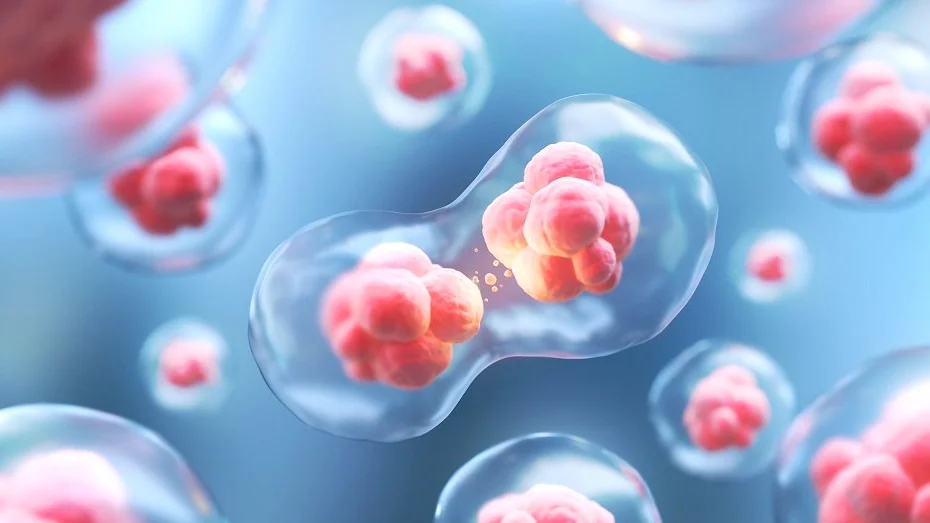
After egg retrieval, fertilization takes place in an advanced laboratory. This stage is known as in vitro fertilization, which means fertilization outside the body.
The collected eggs are combined with sperm from the husband in a carefully controlled environment. In some cases, specialists may recommend ICSI treatment Pakistan, where a single healthy sperm is injected directly into an egg to improve fertilization.
The laboratory team closely monitors embryo development over the next few days. During this time, specialists assess embryo quality and select the healthiest embryos for transfer.
Step 4 — Embryo Transfer
The next step is the embryo transfer Lahore stage. Once the embryo reaches the appropriate stage of development, it is transferred into the uterus.
This procedure is usually painless and does not require anesthesia. A thin catheter is used to place the embryo inside the uterus. The goal is to allow the embryo to attach naturally to the uterine lining, a process known as implantation.
In many IVF programs, specialists may recommend a blastocyst transfer, where embryos are transferred after five days of development to improve implantation potential.
Step 5 — Pregnancy Test
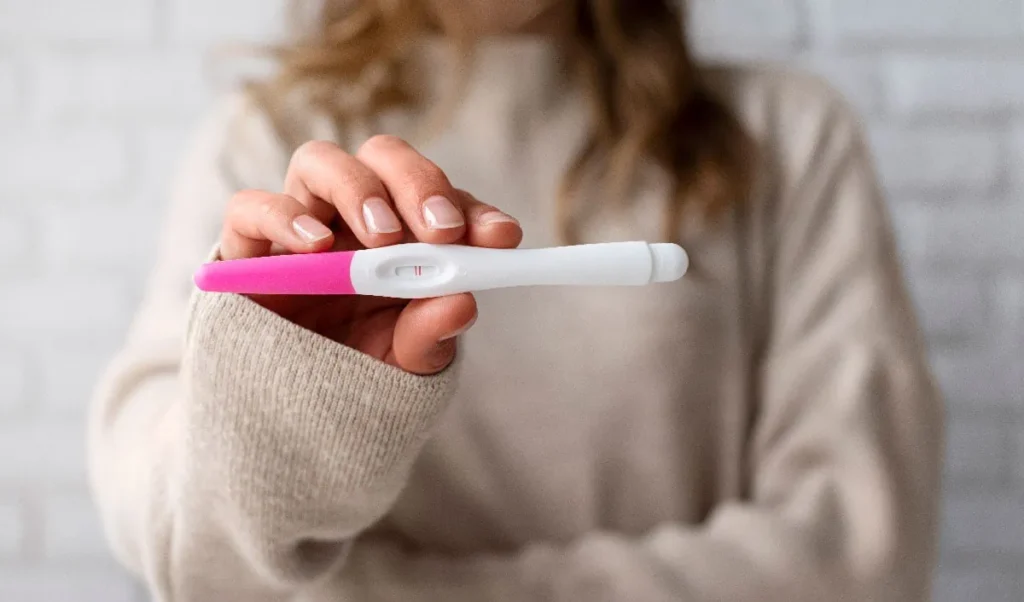
Approximately 10 to 14 days after embryo transfer, a blood test is performed to determine whether pregnancy has occurred.
This waiting period can feel emotional for many couples. However, regular communication with the fertility team helps provide support and guidance throughout the process. If the result is positive, pregnancy monitoring begins immediately.
Is Test Tube Baby Allowed in Islam? Legal Status in Pakistan
One of the most common concerns among Pakistani couples is whether a test tube baby is allowed according to Islamic teachings.
Islam places great importance on family, marriage, and parenthood. As a result, many couples seek religious guidance before starting fertility treatment. Fortunately, IVF is generally considered permissible under Islamic principles when specific conditions are met.
According to the widely accepted position of Islamic scholars and the Federal Shariat Court IVF 2017 ruling in Pakistan, IVF treatment is allowed if the sperm and egg belong to a legally married husband and wife and the embryo is transferred into the wife’s uterus.
This means that third-party sperm donation, egg donation, or surrogacy are not permitted under these guidelines. However, fertility treatment using the married couple’s own reproductive cells remains permissible.
Importantly, a child born through IVF is considered the legal, biological, and legitimate child of the married couple. The treatment simply assists fertilization when natural conception becomes difficult.
For many Muslim couples facing infertility, this ruling provides reassurance that pursuing fertility treatment Pakistan through IVF can be both medically appropriate and religiously acceptable when performed according to Islamic guidelines.
At AAS Fertility & IVF Center, patients receive respectful guidance regarding both the medical and ethical aspects of fertility care.
Test Tube Baby Cost in Lahore, Pakistan (2025–2026)
One of the most frequently asked questions is about test tube baby cost Pakistan. The total cost varies because every fertility case is unique.
For most patients, the cost of a test tube baby in Pakistan typically ranges between PKR 210,000 and PKR 850,000 depending on the complexity of treatment.
Several factors can affect the overall cost, including:
- Age of the patient
- Fertility diagnosis
- AMH level test results
- Number of IVF cycles required
- Fertility medications and hormonal injections
- Need for ICSI treatment
- Embryo freezing or embryo banking
- Additional laboratory procedures
While cost is an important consideration, couples should also evaluate the quality of care, laboratory standards, and the experience of the fertility specialist.
For detailed information about IVF treatment, visit:
[Link to IVF page]
Test Tube Baby Success Rate in Pakistan
The IVF success rate Pakistan varies depending on several medical factors. On average, fertility clinics report a success rate of approximately 26% to 32% per treatment cycle.
However, age remains the single most important factor affecting success. Women under 35 generally have higher pregnancy rates because egg quality tends to be better. As age increases, fertility naturally declines, which may reduce treatment success.
Other factors that influence outcomes include:
- Egg quality
- Sperm quality fertility
- Uterine health
- Embryo quality
- AMH level test results
- Previous fertility history
Additionally, success rates often improve when treatment is performed by experienced specialists using modern laboratory technology and evidence-based fertility protocols.
At AAS Fertility IVF Center, every treatment plan is personalized to maximize the chances of success while maintaining patient safety and ethical care standards.
To learn more about real patient experiences, visit our:
[Link to Success Stories page]
Who Is the Right Candidate for Test Tube Baby Treatment?
A test tube baby procedure can help many couples who face fertility challenges that make natural conception difficult. However, IVF is not always the first treatment option. A fertility specialist will carefully evaluate each case before recommending the most suitable approach.
Blocked Fallopian Tubes
The fallopian tubes carry the egg from the ovary to the uterus. When one or both tubes are blocked, fertilization may not occur naturally. IVF bypasses the fallopian tubes completely, making it an effective solution for many women.
PCOS (Polycystic Ovary Syndrome)
Women with Polycystic Ovary Syndrome (PCOS) often experience irregular ovulation, which can make pregnancy more difficult. When medications and simpler fertility treatments are unsuccessful, IVF may significantly improve the chances of conception.
Male Infertility or Low Sperm Count
Male fertility factors can also affect pregnancy. Low sperm count, poor sperm movement, or abnormal sperm shape may reduce natural conception chances. In such cases, IVF combined with ICSI can help achieve fertilization successfully.
Unexplained Infertility
Sometimes all fertility tests appear normal, yet pregnancy does not occur. This condition is known as unexplained infertility. IVF helps fertility specialists overcome hidden factors that may be preventing conception.
Repeated IUI Failure
Many couples try IUI vs IVF Pakistan treatment options before deciding on IVF. If several IUI cycles have not resulted in pregnancy, IVF may offer a higher chance of success due to greater control over fertilization and embryo development.
Additionally, IVF may be recommended for women experiencing age-related fertility decline, especially those considering pregnancy after 35 Pakistan, where egg quality often becomes an important factor.
Why Choose AAS Fertility & IVF Center in Lahore?
Choosing the best IVF center Lahore is an important step in your fertility journey. At AAS Fertility & IVF Center, patients receive advanced fertility care, modern reproductive treatments, and compassionate support under one roof.
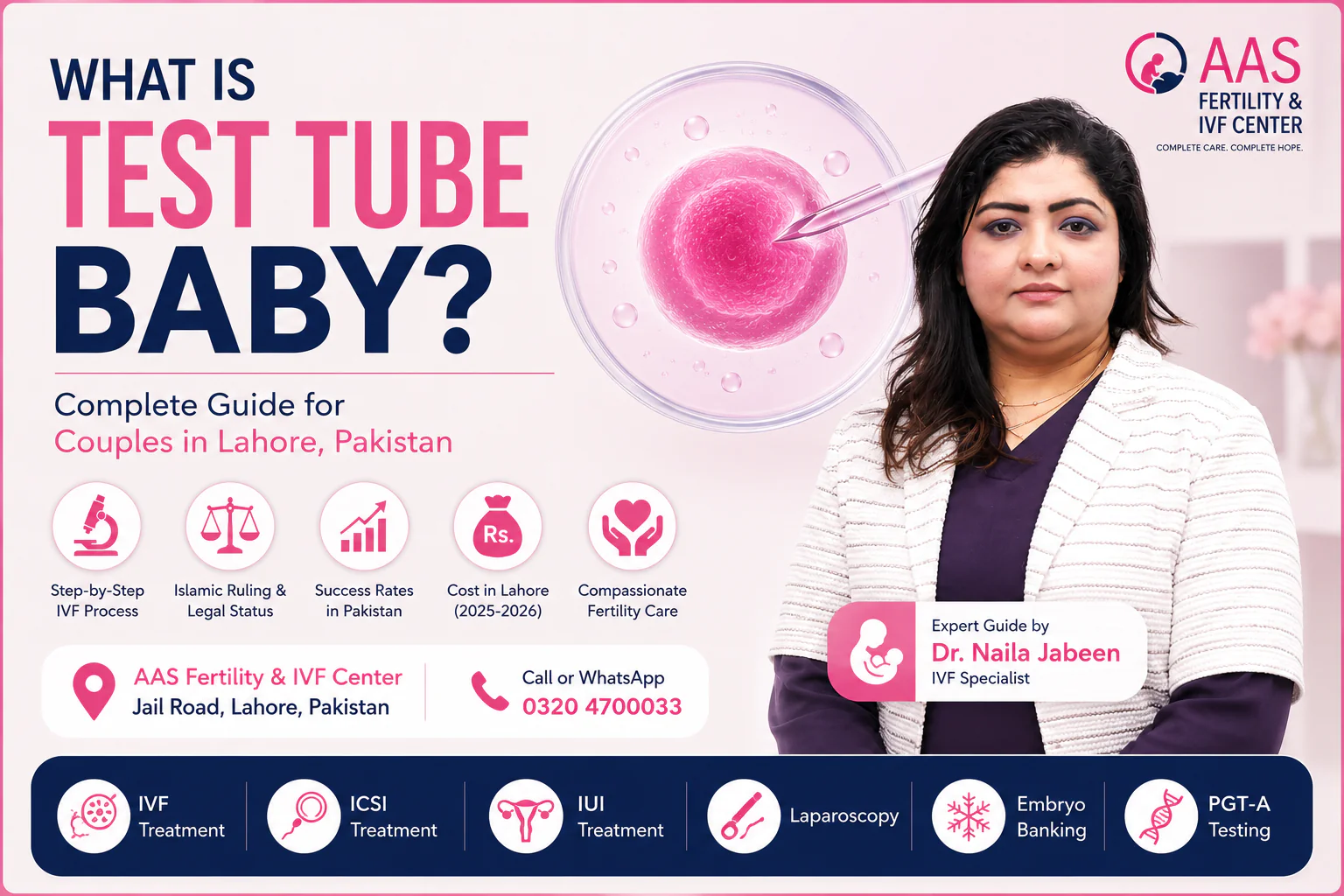
Led by Dr. Naila Jabeen, an experienced IVF specialist, the clinic is dedicated to helping couples achieve parenthood through evidence-based fertility care. Located on Jail Road, Lahore, the center serves patients from across Pakistan seeking trusted and ethical fertility treatment.
Key fertility services include:
- IVF treatment
- ICSI
- Micro TESE
- Laparoscopy
- Embryo Banking
- Ovulation Induction
- PGT-A Testing
- Male and Female Fertility Assessment
Furthermore, patients benefit from personalized treatment plans, transparent communication, and continuous support throughout every stage of care.
Book your free consultation today — [Link to /contact/]
Frequently Asked Questions About Test Tube Baby in Pakistan
Q: What is a test tube baby?
A: A test tube baby is a baby conceived through IVF (In Vitro Fertilization), where fertilization takes place in a laboratory before the embryo is transferred to the mother’s uterus.
Q: Is test tube baby halal in Pakistan?
A: Yes. IVF is generally considered permissible when the sperm and egg belong to a legally married husband and wife and the embryo is transferred to the wife’s womb.
Q: How much does test tube baby cost in Lahore?
A: The cost generally ranges from PKR 210,000 to PKR 850,000 depending on medications, fertility condition, laboratory procedures, and the number of treatment cycles required.
Q: What is the success rate of test tube baby in Pakistan?
A: The average IVF success rate in Pakistan is approximately 26% to 32% per cycle, although success depends on age, fertility health, and treatment quality.
Q: What is the difference between IVF and test tube baby?
A: There is no difference. “Test tube baby” is the commonly used term, while IVF is the medical name for the same fertility treatment.
Q: How many days does the test tube baby process take?
A: A complete IVF cycle usually takes about 4 to 6 weeks from ovarian stimulation to pregnancy testing, although timelines may vary between patients.
Conclusion
A test tube baby is simply a baby conceived through IVF, one of the most effective fertility treatments available today. For many couples facing infertility, IVF provides hope by overcoming challenges related to ovulation, fallopian tubes, sperm quality, and unexplained infertility. Understanding the process, costs, success rates, and Islamic guidance can help couples make informed decisions with confidence.
In Summary: A test tube baby is the result of IVF treatment, where fertilization occurs in a laboratory before the embryo is transferred to the mother’s uterus. IVF is legally permitted and generally accepted in Pakistan when performed using the husband and wife’s own reproductive cells. Success rates depend largely on age, fertility health, and treatment quality.
Contact AAS Fertility & IVF Center today — [Link to /contact/]