Early Pregnancy Symptoms: The Short Answer
Early pregnancy symptoms usually begin around 4 to 6 weeks after the first day of your last period, and the most reliable first sign is a missed period. But many women feel nothing at all in the first weeks, so a home pregnancy test taken on or after the first day of a missed period is the clearest way to find out.
If you are asking “am I pregnant?”, this guide explains the early signs to look for, how they differ from period symptoms, exactly when to test, and which symptoms need urgent care. It is written by the team at AAS Fertility & IVF Center, Jail Road, Shadman II, Lahore. If you are still trying to conceive, our guides on tracking ovulation and timing and the fertile window can help you plan the next cycle.
What Are the Early Pregnancy Symptoms?
The early signs of pregnancy are caused by rising pregnancy hormones, mainly hCG, estrogen and progesterone. Every pregnancy is different, and you may have only a few of the signs below, or none.
Common early signs
- A missed period. For women with a regular cycle, this is the earliest and most reliable sign.
- Tiredness. Extreme tiredness is one of the most common early signs.
- Nausea, with or without vomiting. Often called morning sickness, it can happen at any time of day or night.
- Sore, tender or tingling breasts. They may feel heavier, and the nipples may look darker.
- Needing to pass urine more often, including at night.
- Mood swings and feeling more emotional than usual.
Less common or later signs
- A metallic taste in the mouth, or a sudden dislike of foods and smells you normally enjoy.
- Bloating and mild cramps in the lower abdomen.
- Constipation.
- Light spotting or a very light “period” that is different from your usual one.
- Headaches and mild dizziness.
Most of these signs can also appear before a normal period, which is why symptoms alone cannot confirm a pregnancy. The next sections show how to tell them apart, and a test is the only way to be sure.
When Do Early Pregnancy Symptoms Start?
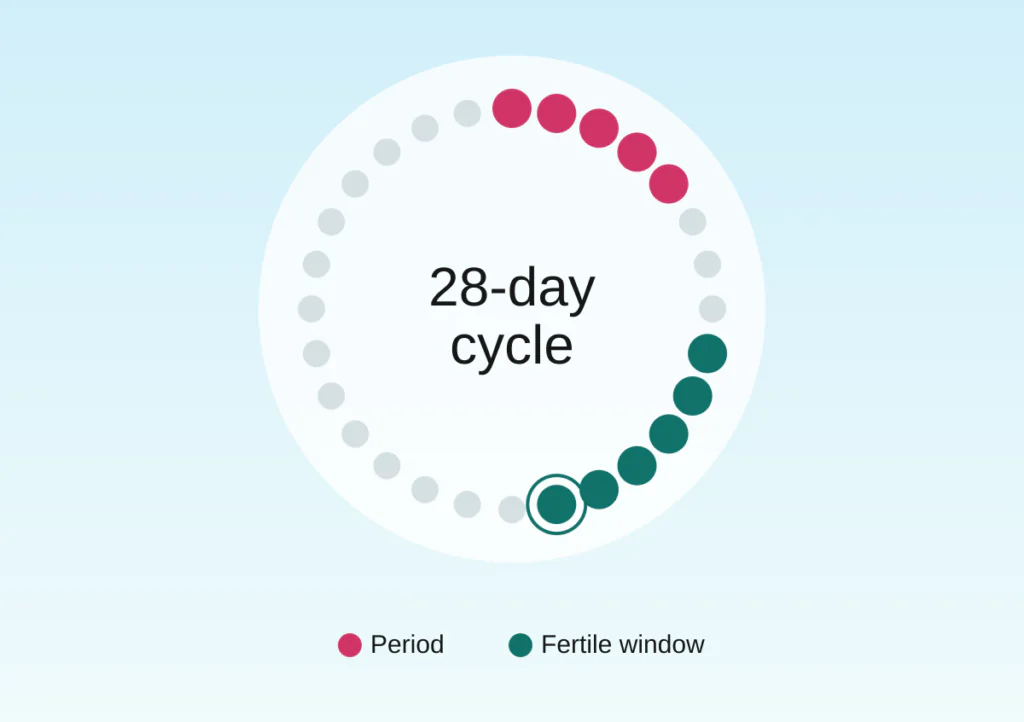
Most women notice early pregnancy symptoms between weeks 4 and 6. Doctors count pregnancy weeks from the first day of your last period, so in weeks 1 and 2 you are not yet pregnant and cannot have symptoms. The table below shows what happens, and what you may feel, at each stage of a typical 28-day cycle.
| Time (from first day of last period) | What is happening in the body | What you may notice |
|---|---|---|
| Weeks 1 to 2 | Your period ends and an egg matures | No pregnancy symptoms |
| About day 14 to 21 | Ovulation, fertilisation, then the embryo travels to the womb and implants | Usually nothing; a few women see light spotting |
| Around week 4 (period due) | hCG, the pregnancy hormone, rises and a test can turn positive | A missed period, tender breasts, tiredness may begin |
| Weeks 5 to 6 | hCG and estrogen climb quickly | Nausea, passing urine more often, stronger tiredness, breast changes |
| Weeks 7 to 8 | Hormone levels stay high | Symptoms are usually more noticeable; mood swings and food dislikes are common |
The timing shifts if you ovulate earlier or later than day 14. If your periods are irregular, it is harder to know when a period is “missed”, and our guide to irregular periods and fertility explains why.
Early Pregnancy Symptoms vs Period (PMS) Symptoms
Early pregnancy and the days before a period feel very alike, because both are driven by progesterone. The signs below are patterns, not proof: only a pregnancy test can tell you which one you have.
| Symptom | Before a period (PMS) | Early pregnancy |
|---|---|---|
| Period | Arrives on or near the expected day | Does not arrive, or is unusually light |
| Breast tenderness | Usually eases once the period starts | Continues, and breasts may feel heavier or tingly |
| Cramps | Lower abdominal cramps that build up to the period | Mild, short cramps; no heavy flow follows |
| Nausea | Uncommon | Common from about weeks 4 to 6, at any time of day |
| Tiredness | Mild to moderate | Often stronger and lasts longer |
| Passing urine | No change | More frequent, including at night |
| Spotting | Light spotting just before the period | Light spotting around implantation, without a full flow |
| Mood | Irritability or low mood that lifts when the period starts | Mood swings that carry on beyond the expected date |
If you are seeing blood and wondering whether it could be pregnancy, our guides on getting pregnant on your period and irregular periods explain the difference between a period, ovulation bleeding and implantation spotting.
When to Take a Pregnancy Test
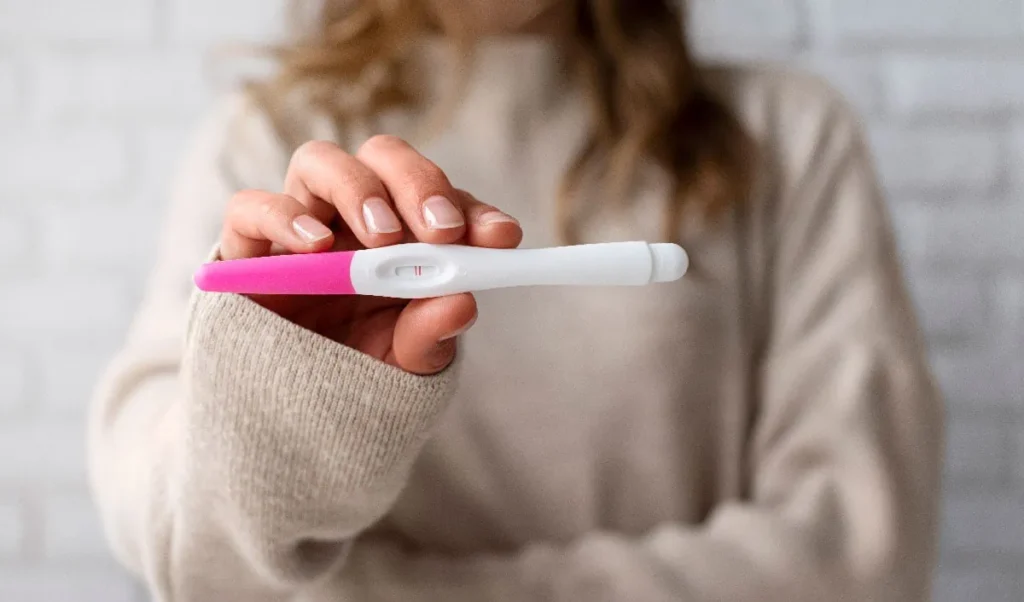
The best time to take a home pregnancy test is on or after the first day of your missed period. For the most reliable result, wait one week after the missed period. Testing earlier can show a false negative, because the pregnancy hormone hCG has not built up enough to be detected.
Home urine test
- Regular cycle: test on or after the first day of your missed period. A positive result is very likely to be correct; a negative result in the first few days is less certain.
- Irregular cycle or unsure of your dates: test at least 21 days after unprotected sex.
- Use first-morning urine. It is the most concentrated, so hCG is easier to find.
- Follow the pack instructions and check the expiry date. Used correctly, home tests are close to 99% accurate.
- Very early tests that claim to work before a missed period are less reliable. A positive is likely true, but a negative does not rule pregnancy out.
Blood test (beta hCG)
A blood test at a clinic or laboratory can detect pregnancy earlier than a urine test and can measure the exact hCG level. Your doctor may advise it if you have irregular periods, a history of miscarriage or ectopic pregnancy, are on fertility treatment, or need a clear answer sooner. If you are having fertility treatment, a trigger injection or other medicine that contains hCG can affect early test results, so follow your clinic’s advice on when to test.
Negative test but your period is late
If the test is negative and your period still has not come, repeat it after a few days or one week. If it is still negative and your period has not arrived, see a doctor, because stress, weight change, thyroid problems, PCOS and other conditions can also delay a period. Our guides on irregular periods and pregnancy with PCOS cover the common causes.
A positive test: what to do next
Book a visit with your doctor to confirm the pregnancy and begin antenatal care. Until then, avoid smoking and alcohol, and ask your doctor about folic acid and any medicines you take.
Warning Signs That Need Urgent Care
Most early pregnancy symptoms are harmless, but a few signs can point to a miscarriage or an ectopic pregnancy, where the embryo implants outside the womb, usually in a fallopian tube. An ectopic pregnancy is uncommon, but it needs urgent treatment.
Go to a hospital emergency department now if you have
- Sudden, severe pain in the lower abdomen or pelvis, especially on one side.
- Pain at the tip of the shoulder.
- Fainting, dizziness, or pale and clammy skin.
- Heavy bleeding that soaks a large pad in an hour or less.
Call your doctor the same day if you have
- Any vaginal bleeding after a positive pregnancy test.
- Mild but persistent pelvic pain or cramping.
- Vomiting so often that you cannot keep fluids down.
- Fever, or pain when passing urine.
Light spotting can be normal in early pregnancy, but it is safer to have it checked than to wait.
Roman Urdu Summary (Hamal ki Shuruati Alamat)
Hamal ki shuruati alamat aam taur par last period ke pehle din se 4 se 6 hafton mein shuru hoti hain. Sab se pehli aur qabil-e-bharosa alamat period ka miss hona hai.
Is ke ilawa thakawat, matli ya ulti, chhati mein dard ya bharipan, aur baar baar peshab aana bhi aam alamat hain. Ye alamat period se pehle wali alamat se milti julti hain, is liye sirf pregnancy test hi pakka jawab deta hai.
Test period miss hone ke pehle din ya uske baad karein. Behtar hai ke ek hafta intezar karein, aur subah ka pehla peshab istemal karein. Agar test negative ho lekin period na aaye, to kuch din baad dobara test karein ya doctor se milein.
Agar achanak tez dard, bahut zyada khoon, ya chakkar aur behoshi ho to foran hospital ke emergency mein jayein.
When to See a Fertility Specialist in Lahore
If you keep getting negative tests while trying to conceive, the next step is a proper assessment rather than more waiting. Consider booking a consultation if:
- You have been trying for 12 months without success, or for 6 months if you are 35 or older. Our guide on how often couples should try to conceive explains timing.
- Your periods are irregular, very painful, or have stopped.
- You have had a miscarriage, an ectopic pregnancy, or pelvic infection or surgery before.
- You have PCOS, thyroid problems, endometriosis or another condition that can affect ovulation.
- Your husband has a known sperm problem, or you simply want both partners checked. See our fertility test guide for what the first tests involve.
Book your free first consultation at AAS Fertility & IVF Center. Dr. Naila Jabeen’s team will review both partners’ history, explain the tests that are needed and what each step costs, and build a plan around your own situation. Learn how a consultation works.
- Address: Chohan Tower, 16 Jail Road, Shadman II, Lahore
- Phone and WhatsApp: +92 311 1100251
- Landline: 042 375 79217
Frequently Asked Questions
Can early pregnancy symptoms start before a missed period?
Sometimes. Tiredness, headache and breast tenderness can appear before a period is due, but they are also common before a normal period. For that reason they cannot confirm a pregnancy, and a test after the missed period is more reliable.
Can you be pregnant without any symptoms?
Yes. Some women have no symptoms at all in the first weeks, and others only notice a missed period. Not feeling pregnant does not mean you are not pregnant, so test if your period is late.
Is light bleeding in early pregnancy normal?
Light spotting can happen around the time the embryo implants and is often normal. Bleeding that is heavy, or comes with pain, dizziness or fainting, is not, and needs urgent medical care.
Can a pregnancy test be wrong?
A false negative is the most common error, usually because the test was taken too early or with dilute urine. A false positive is rare, but it can follow a recent pregnancy loss or fertility medicine that contains hCG. If the result does not match your symptoms, repeat the test or ask for a blood test.
Can stress or PCOS delay a period and feel like pregnancy?
Yes. Stress, sudden weight change, thyroid problems and PCOS can all delay or skip a period. A negative test with a late period is a reason to see a doctor.
Do my symptoms mean the pregnancy is healthy?
Not necessarily. Symptoms vary a great deal from woman to woman, and having few of them is not a sign of a problem. What matters is a confirmed pregnancy and regular antenatal care, with urgent review for bleeding or severe pain.
Which doctor should I see after a positive test?
A gynaecologist or obstetrician. If you conceived with fertility treatment, or you have had a miscarriage or ectopic pregnancy before, tell the doctor early so the first scan and blood tests are planned correctly.
Conclusion
Early pregnancy symptoms such as a missed period, tiredness, nausea and tender breasts usually appear around weeks 4 to 6, but they look a lot like period symptoms and some women have none. The reliable answer is a home pregnancy test on or after the first day of a missed period, repeated a week later if it is negative and your period has not come. Severe pain, heavy bleeding or fainting need emergency care.
If you are in Lahore and have been trying to conceive without a positive test, or you want a clear plan, visit AAS Fertility & IVF Center on Jail Road, Shadman II, or call or WhatsApp +92 311 1100251. Your first consultation is free. You can also read our guides on fertility tests and the IVF process to know what to expect.
This article is general information, not a diagnosis. If you are worried about your health, speak to a doctor.